Introduction
For contractors, fleet operators, maintenance technicians, and other professionals who depend on work vehicles, keeping tools organized is an important part of the working day. Equipment needs to remain accessible, protected from unnecessary exposure, and stored in a way that does not interfere with transporting materials or operating the vehicle. When tools are scattered throughout a truck bed or cab, locating the right item can take extra time and create avoidable clutter.
A dedicated truck toolbox offers a practical way to establish a consistent storage area. However, not every storage solution uses space in the same way. A toolbox installed inside the cab may reduce passenger or interior storage room, while a box placed in the truck bed can take up space needed for supplies, machinery, or other cargo. An underbody toolbox provides another option by using a suitable area beneath the vehicle body or chassis.
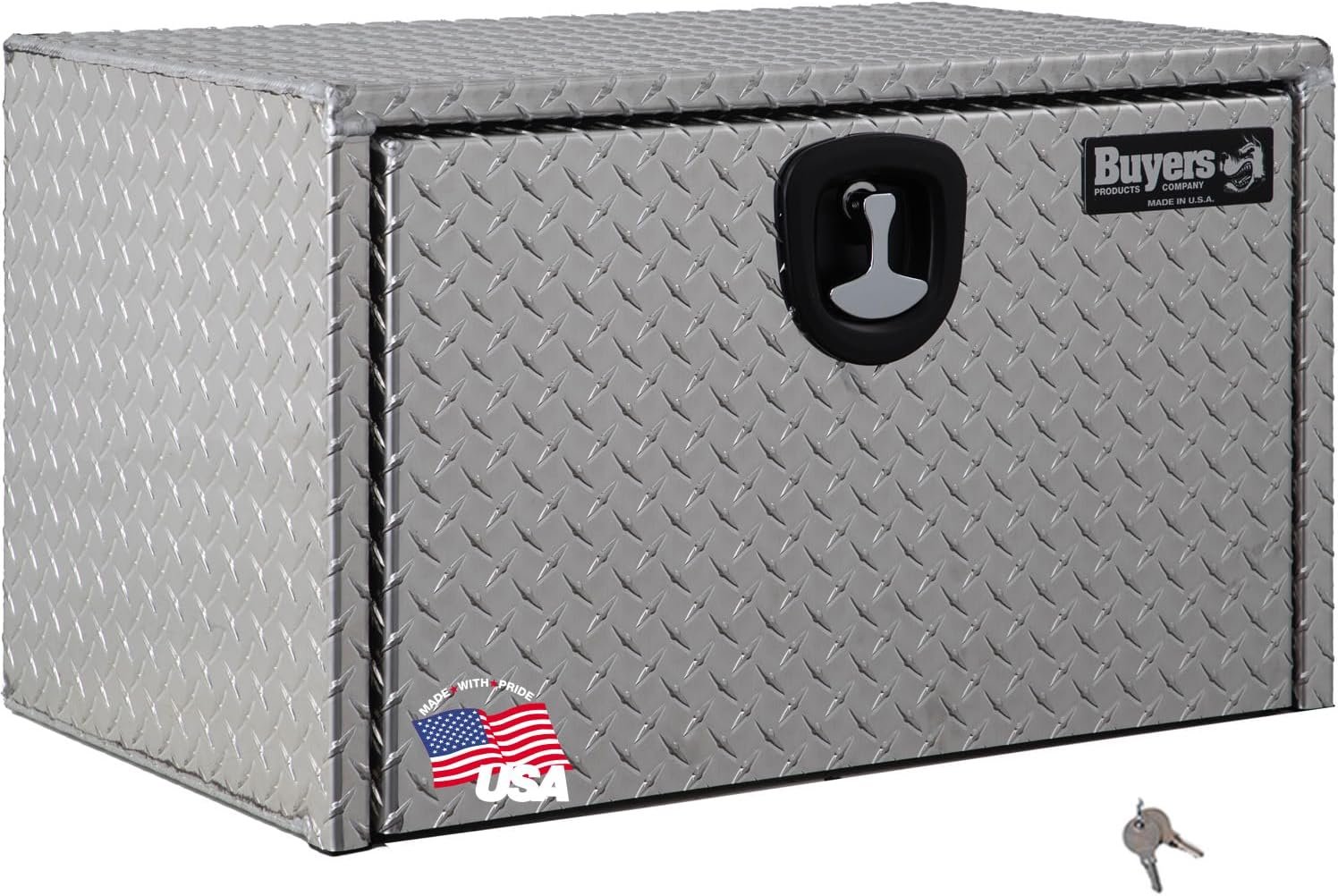
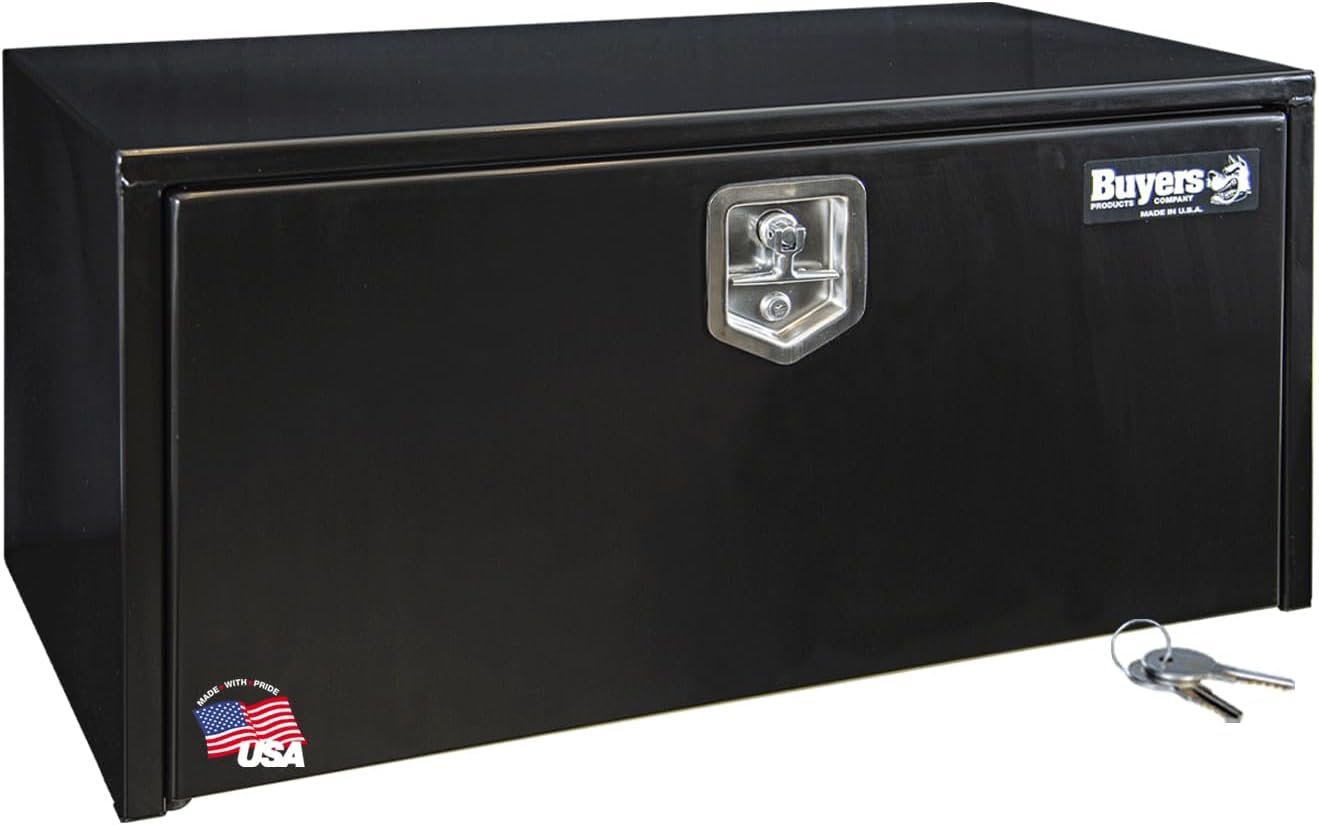
The Buyers Products 1702305 Steel Underbody Tool Box is identified as a 36 x 18 x 18-inch steel storage box designed for underbody applications. Its dimensions make it relevant to people who need a dedicated enclosure for tools and work supplies while preserving as much of the primary cargo area as possible. The product listing also identifies a T-handle arrangement, a common design for accessing and securing commercial vehicle storage compartments.
Choosing an underbody toolbox involves more than checking its dimensions. The vehicle must have suitable mounting space, sufficient ground clearance, and a safe way to support the weight of the box and its contents. The storage environment also matters, particularly for vehicles exposed to rain, road salt, dust, and demanding work conditions.
This guide explores the purpose of the Buyers Products 1702305 steel underbody tool box, its potential applications, the practical considerations involved in installation, and the differences between steel underbody boxes and other common truck storage options.
Understanding the Buyers Products 1702305 Steel Underbody Tool Box
An underbody toolbox is designed to be installed beneath an appropriate vehicle body or structural area. Rather than sitting on top of the truck bed, it occupies space below the main cargo platform when the vehicle’s design permits.
This arrangement can help keep selected tools separate from bulk materials and equipment. For example, a service truck may carry larger replacement parts in its main cargo area while storing smaller hand tools and maintenance supplies in a dedicated underbody compartment.
The Buyers Products 1702305 is listed with nominal dimensions of 36 inches wide, 18 inches high, and 18 inches deep. Those measurements provide a starting point for evaluating whether the enclosure might fit a particular vehicle and accommodate the intended contents.
External measurements do not necessarily equal usable interior space. Wall thickness, door design, hinges, locking hardware, and the shape of the enclosure can affect the amount of room available for tools. The opening itself also determines whether bulky or long items can be placed inside and removed conveniently.
Before selecting this model, consult the current manufacturer specifications to verify the exact dimensions, construction details, mounting requirements, finish, locking arrangement, and any stated load or environmental ratings.
Why Underbody Storage Matters
Work vehicles often need to perform two functions at once: transport tools and carry materials. A toolbox positioned on the cargo platform may be convenient, but it can reduce the area available for lumber, pipes, landscaping equipment, machinery, or other bulky items.
Underbody storage can help address this trade-off. When a suitable location is available, tools can be kept outside the primary cargo space while remaining associated with the vehicle.
It can also support a more organized workflow. Workers may assign specific tools to a dedicated compartment rather than allowing them to move between the cab, bed, and portable cases.
However, underbody storage is not suitable for every vehicle. Fuel tanks, exhaust components, suspension parts, wiring, chassis members, and other equipment can limit available space. Ground clearance and access to the door must also be considered before installation.
Key Features of the Buyers Products 1702305 Steel Underbody Tool Box
1. Steel Construction
The product is identified as a steel underbody toolbox. Steel is widely used in commercial storage equipment because it can provide structural strength and support for demanding working environments when appropriately designed and manufactured.
For work vehicles that carry tools regularly, a steel enclosure can offer a solid storage structure. Its suitability depends on the construction, material thickness, design, finish, mounting arrangement, and the loads it is expected to handle.
Steel also has characteristics that deserve consideration. It is generally heavier than a comparable aluminum enclosure, and its protection against corrosion depends significantly on the surface finish and maintenance. Scratches, chipped coatings, exposed edges, and damaged seams can create areas where corrosion develops, especially when moisture and road salt are present.
The exact steel type, panel thickness, protective coating, and construction methods should be confirmed from the current product documentation. The material description alone does not establish a particular load capacity or resistance to environmental damage.
2. Underbody Mounting Design
The underbody configuration allows the box to occupy a space beneath a suitable truck body or vehicle structure.
This can be useful when the main cargo area needs to remain available for work materials. A contractor, for instance, may need to transport bulky supplies while keeping a selection of smaller tools organized separately.
The installation location is a critical part of the decision. The box must be mounted securely, positioned to maintain suitable ground clearance, and placed where the access door can operate without interference.
An underbody toolbox should not obstruct suspension movement, exhaust components, vehicle wiring, fuel-system components, braking equipment, or other important parts. The mounting arrangement must also account for the weight of the loaded enclosure and the forces created by normal road travel.
3. Nominal Dimensions of 36 x 18 x 18 Inches
The listed dimensions help users estimate the space needed for installation and the general size of the storage enclosure.
A 36-inch width provides a longer storage area than a narrower box of otherwise similar height and depth. Depending on the internal design, this may make it easier to arrange several smaller tools or compatible storage cases side by side.
The 18-inch height and 18-inch depth provide additional dimensions to consider when planning how equipment will be stored. The shape of the contents matters just as much as their combined volume. A group of compact hand tools may fit differently from a large tool case or a long piece of equipment.
These figures describe the nominal external dimensions, not a guarantee that every item within those measurements will fit. Before purchasing, measure the intended mounting area and compare the available space with the manufacturer’s complete dimensional information.
Allow room for brackets, fasteners, door movement, handles, and access. A box can fit into an opening but still be difficult to use if the door cannot open fully.
4. T-Handle Access
The product listing identifies a T-handle arrangement. T-handles are commonly used on commercial storage enclosures because their shape provides a practical grip for opening and closing a door.
For workers who retrieve tools repeatedly, a straightforward access mechanism can be helpful. It also provides a way to secure the compartment when closed, depending on the specific lock and hardware supplied with the model.
Users should verify the exact locking mechanism and included hardware in the current product documentation. A T-handle should not automatically be assumed to include a particular lock cylinder, keying arrangement, or advanced security feature unless the manufacturer confirms it.
A lock can help restrict casual access, but it does not make a toolbox theft-proof. Valuable tools may require additional precautions, such as inventory records, controlled key access, secure vehicle parking, or removing equipment when the vehicle is unattended for long periods.
5. Dedicated Storage for Tools and Supplies
A fixed underbody box can create a consistent location for selected work equipment. This is useful when tools need to remain with a particular vehicle rather than travel between different portable cases.
Depending on the usable interior space and the equipment involved, the enclosure may be used for hand tools, measuring devices, fasteners, maintenance supplies, gloves, or other items appropriate for the storage environment.
Small organizers and labeled containers can make the space easier to manage. Separating different categories of tools can reduce clutter and help workers identify missing equipment more quickly.
The final arrangement should account for the size of the opening and the weight of the stored items. Heavy tools should be secured against excessive movement, and the box should not be loaded beyond its documented limits.
How the Buyers Products 1702305 Can Be Used
An underbody toolbox can support a variety of work-vehicle storage needs. Its practical value depends on the vehicle, the type of work being performed, and the equipment that must remain available.
Storage for Construction and Contracting Tools
Construction professionals frequently transport hand tools, measuring equipment, fasteners, and other supplies alongside bulky materials. Keeping every small item in the main cargo area can make it harder to locate tools when they are needed.
An underbody toolbox can provide a separate place for selected equipment while leaving more of the truck bed available for building materials and larger items.
For example, a contractor might use the compartment for tape measures, compatible hand tools, utility accessories, packaged fasteners, and other frequently used supplies. The specific contents should be selected according to the interior dimensions and the manufacturer’s load recommendations.
Heavy equipment should be arranged to prevent unnecessary movement, and small parts should be placed in suitable containers. A consistent layout can make it easier to return tools to their designated locations at the end of a job.
Organization for Maintenance Technicians
Maintenance technicians often visit different sites to inspect equipment, perform repairs, and replace components. They may need a selection of tools that is readily available without occupying the entire cargo area.
An underbody box can help separate routine maintenance tools from larger equipment and replacement parts. It can also support a repeatable storage system when several technicians use the same vehicle.
A practical layout might separate measuring tools, hand tools, and packaged consumables into labeled cases. Items used frequently can be positioned for convenient access, while specialized tools can be stored in a separate container.
If the technician carries electronic instruments or other moisture-sensitive equipment, the enclosure’s weather-protection capabilities should be verified. Steel construction does not automatically establish a particular waterproof or dustproof rating.
Storage for Fleet and Service Vehicles
Businesses operating several service trucks may want each vehicle to follow a consistent organization system. Standardized storage can help workers locate tools quickly, regardless of which vehicle they are assigned.
An underbody toolbox can provide a designated location for common equipment and supplies. Fleet managers may also use a documented tool inventory to track equipment across shifts and identify missing items.
Before adopting one model across an entire fleet, confirm compatibility with each vehicle configuration. Chassis layouts, body styles, wheelbases, fuel-system locations, and existing accessories can vary even between vehicles of the same general type.
Installation procedures should also be documented so that each toolbox is secured appropriately and does not interfere with vehicle operation.
Landscaping and Property Maintenance
Landscaping and property maintenance vehicles often carry a mixture of hand tools, equipment, replacement parts, and materials. A toolbox mounted beneath a suitable vehicle body can help keep smaller accessories separate from larger items.
For example, a worker may want a dedicated compartment for measuring tools, compatible hand tools, fasteners, gloves, and basic maintenance supplies while leaving the main cargo area available for equipment.
The installation needs careful planning if the vehicle regularly operates on uneven ground, gravel paths, or work sites with obstacles. A box mounted too low may be more exposed to impacts or debris.
The final mounting location should reflect the vehicle’s normal operating environment rather than simply the amount of space available when the truck is parked on level ground.
Mobile Repair and Field Service
Mobile repair businesses often carry tools to customer locations instead of working from a fixed workshop. A dedicated storage compartment can help keep frequently used equipment associated with the vehicle and separate from replacement parts or other cargo.
The box may be particularly useful when the vehicle needs to carry both tools and bulky components. However, the selection of stored equipment should reflect how the box will be accessed during a typical job.
Frequently used items should be easy to retrieve without unloading unrelated equipment. If the door is difficult to access in a crowded work area, the convenience of the storage arrangement may be reduced.
Trailer Storage
Some trailers have suitable structural areas where an underbody toolbox can be installed. This can provide a dedicated location for tools and supplies while preserving the main platform for the trailer’s intended cargo.
Trailer installation requires attention to more than physical fit. Ground clearance, axle and suspension movement, brake components, lighting, wiring, and load distribution all need to be considered.
The box and its contents add weight to the trailer. That weight must be included when evaluating the trailer’s capacity and load balance.
Where the mounting requirements are uncertain, a qualified installer can help assess whether the proposed location is suitable without compromising the trailer’s structure or safe operation.
Who May Find This Steel Underbody Tool Box Suitable?
The Buyers Products 1702305 may be relevant to people who need a fixed storage enclosure beneath a compatible vehicle body. Its suitability depends on the intended contents, mounting location, and working conditions.
Contractors and Tradespeople
Contractors often need to transport both tools and materials. Underbody storage can help keep smaller equipment separate while leaving the primary cargo platform more available for larger loads.
Electricians, plumbers, carpenters, and general contractors may have different storage needs. Before selecting a box, compare the usable interior space and opening dimensions with the actual tools being carried.
Commercial Fleet Operators
Fleet managers may consider underbody boxes as part of a standardized vehicle layout. A consistent storage location can support tool inventories, reduce clutter, and make vehicle handovers more straightforward.
Compatibility should be checked for each vehicle rather than assumed across an entire fleet. Different chassis and body configurations may require different storage arrangements or mounting hardware.
Maintenance and Repair Businesses
Technicians who travel between customer sites may benefit from having common tools stored in a dedicated compartment.
A steel enclosure may be appropriate where a sturdy storage structure is required, provided its weight, corrosion protection, and mounting needs are compatible with the vehicle.
Landscaping Professionals
Landscaping and property maintenance workers may need extra storage for smaller equipment while keeping the main cargo area available for larger tools and materials.
The underbody location can be useful, but ground clearance is especially important when vehicles operate on uneven or unpaved surfaces.
Owners of Work Trucks and Trailers
Owners who want a fixed place for tools may consider an underbody box if the vehicle has suitable space and mounting points.
For vehicles with limited clearance, complex underbody layouts, or frequent off-road use, a bed-mounted, side-mounted, or portable toolbox may be more appropriate.
Important Things to Consider Before Installation
The success of an underbody toolbox depends on correct fitment, secure mounting, sensible loading, and ongoing maintenance. Several practical details deserve attention before installation.
1. Measure the Mounting Area Carefully
Start by measuring the available width, height, and depth where the box is intended to sit. Compare these measurements with the manufacturer’s dimensions and allow room for mounting hardware and door movement.
Do not rely solely on the visible opening beneath the truck. Components behind or above the mounting area can interfere with installation, and some parts may move as the suspension operates.
Also check the access door’s opening path. A box may physically fit but be inconvenient if a frame member, fuel tank, tire, or other component blocks the door.
2. Evaluate Ground Clearance
Ground clearance is one of the most important considerations for underbody storage.
A box mounted too low may be exposed to impacts from road obstacles, steep driveways, uneven job sites, or changes in terrain. These risks can be greater for trucks that regularly travel on unpaved roads or construction sites.
The installation should account for the vehicle’s loaded height, suspension movement, and normal operating environment. A qualified installer can help identify a suitable mounting position without creating avoidable clearance problems.
3. Confirm Structural Mounting Points
A loaded toolbox must be supported by an appropriate mounting structure. The correct arrangement depends on the vehicle, the toolbox design, and the hardware specified by the manufacturer.
Do not assume that any nearby body panel can safely support the enclosure and its contents. Mounting points must accommodate the load and the forces created during normal travel.
Follow the manufacturer’s installation guidance and relevant vehicle-specific instructions. Structural modifications should not be made without appropriate evaluation, because drilling or altering the wrong component can compromise safety or damage the vehicle.
4. Consider the Weight of Steel Construction
Steel is generally heavier than a comparable aluminum enclosure. That additional weight may be acceptable for some commercial vehicles, but it still needs to be included in the overall load calculation.
The toolbox’s weight combines with the weight of its contents and any other equipment installed on the vehicle. Check the vehicle’s payload limits and axle ratings, and consider how the box’s position affects load distribution.
A manufacturer’s load rating for the enclosure, if provided, is separate from the vehicle’s overall payload capacity. Both need to be respected.
5. Understand Corrosion Protection
Steel can provide a durable storage structure, but corrosion protection depends on the material, surface finish, manufacturing quality, and maintenance.
Underbody equipment is exposed to water, mud, road debris, and potentially road salt. Scratches or damaged coatings may leave areas more vulnerable to corrosion.
Check the current product documentation for information about the finish and intended operating environment. Inspect the enclosure periodically, especially around seams, fasteners, corners, and areas where the surface may be damaged.
Cleaning practices should follow the manufacturer’s recommendations. Any repair to a damaged finish should use a method suitable for the material and original coating.
6. Check Weather Protection
An underbody box may encounter rain, splashing water, dust, and changing temperatures. The degree of protection depends on its door, seals, seams, and overall construction.
Steel construction alone does not mean that the enclosure is waterproof. If the stored items must remain dry, verify any stated weather-resistance rating and consider additional protective cases where appropriate.
Even when a box has seals, inspect them periodically for damage or deterioration. Stored equipment should also be checked after exposure to unusually wet or dusty conditions.
7. Secure Tools Against Movement
Tools can shift during acceleration, braking, and turns. Heavy items moving inside a metal enclosure may damage other equipment or place additional stress on the box.
Use suitable organizers, cases, or restraints to keep the contents in place. Store heavy tools where they can be secured and avoid overloading the enclosure.
The internal layout should also account for the opening. A case that fits inside may still be difficult to remove if it is wider than the usable access opening.
8. Review the Locking Arrangement
A T-handle can provide convenient access and help secure the door, but the exact locking features should be verified before assuming a particular level of security.
Consider who needs access to the toolbox and how keys will be managed. Businesses may benefit from a documented process for distributing and returning keys.
For valuable tools, a lock should be only one part of a broader security plan. Vehicle parking, tool inventories, and removing high-value equipment when appropriate can also reduce risk.
9. Check for Interference With Vehicle Components
The underbody of a vehicle contains important systems that must remain accessible and operate without obstruction. These may include suspension components, exhaust parts, fuel-system equipment, brake lines, wiring, and chassis members.
The toolbox must not interfere with the operation or servicing of these systems. It should also be positioned so that routine vehicle maintenance remains possible.
Before installation, inspect the full area and consult appropriate vehicle documentation. Where necessary, seek assistance from a qualified installer familiar with the specific vehicle.
10. Plan for Access and Daily Use
A toolbox is useful only if workers can reach its contents conveniently. Consider where the vehicle will normally be parked and whether the door can open safely in those locations.
If the box is positioned near a curb, worksite obstacle, or other equipment, access may be more difficult than expected. Frequently used items should be arranged so that workers do not need to unload the entire compartment to reach them.
A storage plan based on daily tasks can make better use of the available space than simply filling the box with whatever tools happen to be nearby.
Comparing Steel Underbody Tool Boxes With Other Storage Categories
Different toolbox designs serve different purposes. Understanding their general strengths and limitations can help users choose a storage arrangement that fits the vehicle and work requirements.
Steel Underbody Tool Boxes
Steel underbody boxes use space beneath a suitable truck body or trailer structure. Their main practical advantage is the opportunity to preserve the primary cargo platform for other materials.
Steel construction can provide a substantial enclosure, but weight and corrosion protection require attention. Installation also depends on available mounting points, ground clearance, and access to the door.
This category may suit commercial vehicles that need a fixed storage compartment and have sufficient space underneath the body.
Aluminum Underbody Tool Boxes
Aluminum underbody boxes serve a similar purpose but generally weigh less than comparable steel enclosures.
Lower enclosure weight can be useful when managing a vehicle’s overall load, while aluminum’s corrosion characteristics may be attractive in some environments. However, actual durability depends on construction, alloy, finish, installation, and maintenance.
Steel and aluminum should not be compared by material alone. The specific design, load requirements, and working conditions are important in deciding which type is appropriate.
Truck Bed Tool Boxes
Bed-mounted toolboxes sit on or within the truck bed. Their position can make them easier to reach without reaching beneath the vehicle.
The trade-off is that they occupy some of the cargo platform, which may be inconvenient for vehicles carrying bulky materials or machinery. The amount of space lost depends on the box’s shape and mounting position.
For a truck that needs the full bed for cargo, underbody storage may be worth considering if installation is feasible.
Side-Mounted Storage Boxes
Side-mounted boxes can provide access from the side of a truck or service body. Depending on the vehicle design, they may be easier to reach than an underbody compartment.
Their suitability depends on available mounting space, body structure, door clearance, and overall vehicle width. They may also compete with other equipment installed along the sides of the vehicle.
An underbody box can be useful when side-mounted storage is impractical, although the ground-clearance and access requirements remain important.
Portable Toolboxes
Portable toolboxes can be moved between vehicles or carried directly to a job site. They offer flexibility for workers who need to take their tools away from the truck.
Their capacity and organization depend on the individual case. Several portable boxes can also become cumbersome to manage when a large tool inventory must travel together.
A fixed underbody box may be more convenient for equipment that stays with a specific vehicle, while portable storage is often better for tools that move between jobs or workers.
Drawer Systems and Service-Body Storage
Drawer systems and purpose-built service bodies can provide structured storage for a large inventory of tools and supplies. They may suit businesses that need an organized mobile workshop.
These systems can require more space, planning, and installation work than a single underbody box. Their complexity may be unnecessary for a vehicle that needs only one additional compartment.
The appropriate choice depends on how much equipment must be carried, how frequently it is accessed, and whether a broader vehicle-storage system is justified.
Frequently Asked Questions
What are the dimensions of the Buyers Products 1702305 tool box?
The product is identified as a 36 x 18 x 18-inch steel underbody tool box. Check the current manufacturer specifications for the exact dimensional convention and any additional measurements required for installation.
What is an underbody toolbox used for?
An underbody toolbox provides storage beneath a suitable truck body or trailer structure. It can keep tools and supplies separate from the main cargo area, helping preserve space for materials and larger equipment.
What are the advantages of steel construction?
Steel can provide a sturdy storage structure when appropriately designed and manufactured. However, it is generally heavier than comparable aluminum construction, and corrosion protection depends on the finish, environment, and maintenance.
Will this toolbox fit any truck?
No. Fitment depends on the vehicle’s underbody layout, available mounting points, ground clearance, nearby components, and access requirements. Measure the intended location and review the manufacturer’s installation information before choosing a model.
Is the Buyers Products 1702305 waterproof?
The material description does not establish that the box is waterproof. Weather protection depends on the enclosure’s construction, seals, door, and other design details. Check the current product specifications if moisture protection is important for the stored tools.
Can heavy equipment be stored in this toolbox?
That depends on the manufacturer’s stated load limits, the mounting arrangement, and the vehicle’s capacity. Confirm the enclosure’s rating if one is provided, secure the contents, and include the weight of the box and tools in the vehicle’s overall load calculation.
What is a T-handle on a toolbox?
A T-handle is a handle design used to operate a storage enclosure’s door. Depending on the model, it may incorporate a locking mechanism. The exact lock type and included hardware should be confirmed in the current product documentation.
How can tools be organized inside an underbody box?
Labeled cases, small organizers, and a consistent storage layout can help keep equipment separate. Frequently used items should be easy to reach, and heavy tools should be secured to prevent unnecessary movement during travel.
Does steel require more maintenance than aluminum?
Maintenance requirements depend on the specific product and working environment. Steel surfaces may need attention where protective coatings are scratched or damaged, particularly in wet or salty conditions. Both steel and aluminum enclosures should be inspected for loose hardware, damaged seals, and other signs of deterioration.
Is an underbody toolbox better than a bed-mounted toolbox?
Neither design is right for every vehicle. Underbody storage can preserve cargo space but requires suitable clearance and mounting points. Bed-mounted storage may be easier to access but occupies part of the cargo platform. The choice depends on the vehicle layout and the user’s priorities.
Conclusion
The Buyers Products 1702305 Steel Underbody Tool Box is a storage option designed for compatible work trucks and other suitable vehicle applications. Its listed 36 x 18 x 18-inch dimensions, steel construction, underbody arrangement, and T-handle access design provide a starting point for evaluating how it might fit into a commercial storage setup.
For contractors, maintenance technicians, fleet operators, and other professionals, an underbody toolbox can provide a dedicated location for tools and supplies without taking up as much of the main cargo platform. A consistent storage arrangement can also make it easier to organize equipment and maintain a tool inventory.
The most important step is to verify that the box suits the intended vehicle and work environment. Mounting space, ground clearance, structural support, total weight, corrosion protection, weather exposure, and access should all be considered before installation. Steel construction can offer a useful storage structure, but its suitability depends on the particular design and how it is maintained.
Review the current manufacturer’s specifications and installation instructions, and seek qualified assistance if the vehicle’s mounting requirements are uncertain.
You can check more details on Amazon here
As an Amazon Associate, we earn from qualifying purchases.